Building a World-Class Game Development Company from the Balkans


What does it take to grow a game development studio in a relatively young industry, develop the people behind it, and build games for a global audience?
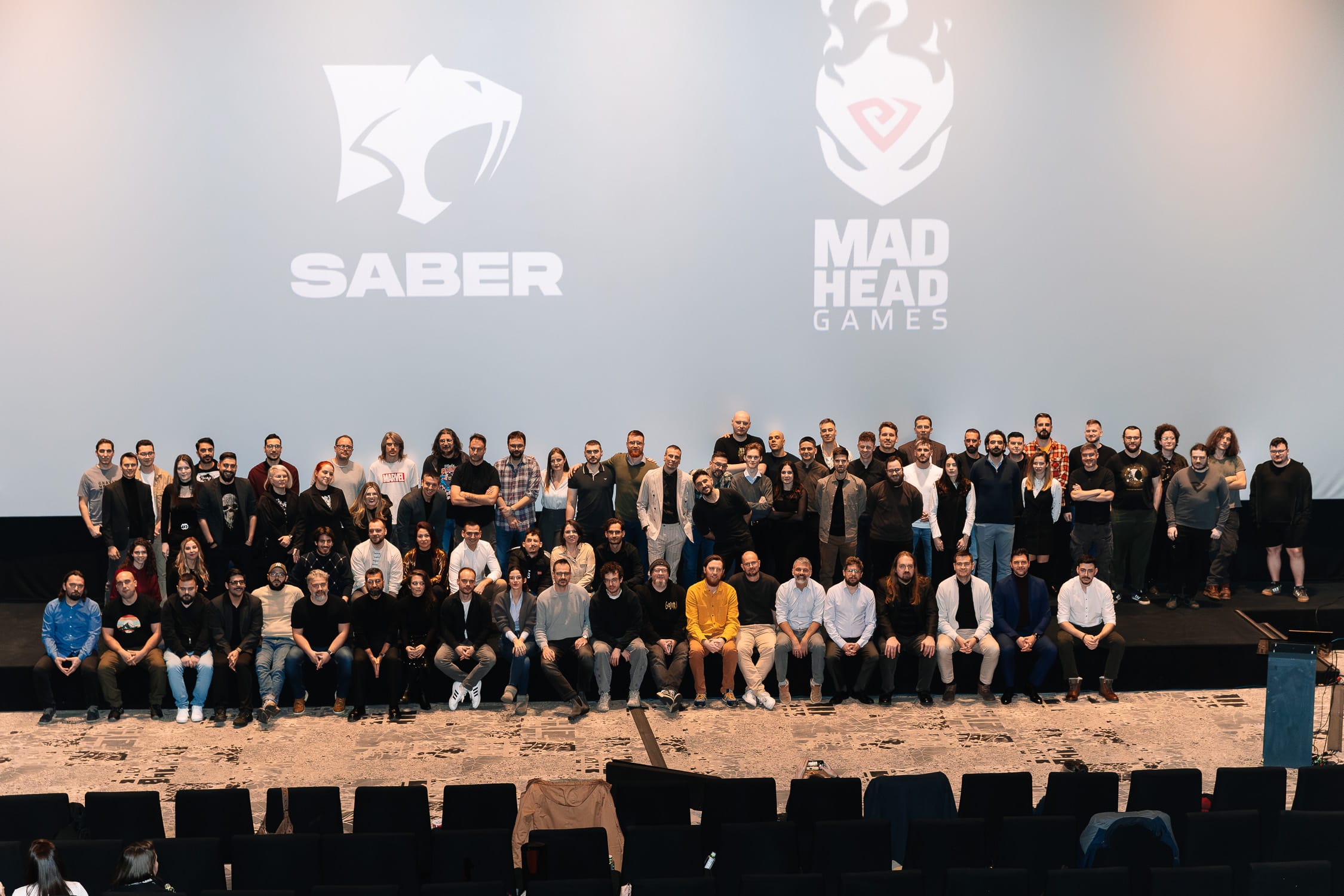
The former Mad Head Games team, now operating as Saber Serbia and Saber Bosnia and Herzegovina, offers a closer look at the people, decisions, and challenges behind that ambition.
Building a game is one thing. Building a studio capable of taking on increasingly ambitious projects, developing the people who make them possible and sustaining that growth over time is another challenge entirely.
In the first part of our conversation with Saber Serbia i Saber Bosnia&Herzegovina (ex-Mad Head Games), we looked at how Clive Barker’s Hellraiser: Revival evolved from an early prototype into a finished game. This time, we're stepping back from the game itself to look at the studio behind it: how it has grown, how its people have evolved, and what it takes to build a development business capable of competing internationally.
Growing beyond the original scope
One of the biggest changes in their history was not simply an increase in team size or project complexity. It was a fundamental shift in the kind of games the studio was making.
That transition required more than learning new tools or adopting different production processes. It changed the skills the studio needed, the scale of its projects and the responsibilities people had to take on.

From the beginning, the studio's philosophy was to promote from within and give people opportunities to move into roles they were passionate about, supported by dedicated learning and development programs.
But formal training can only take a team so far when the work itself is entering unfamiliar territory.
“When a project scales that aggressively, on-the-job learning is inevitable. No training program alone can fully simulate the real-world challenges of core 3D production.”
The development of Hellraiser: Revival became a learning curve for practically the entire team. People expanded their skills, took on broader responsibilities and, in some cases, advanced into new roles. Pelivanović was among those who experienced that growth herself.
The studio also recognized that internal development could not provide every skill or level of experience the project required. It brought in international talent for key senior positions, introducing expertise that was not readily available in the local market.
The result was a combination of two approaches: giving existing employees room to grow while bringing in experienced people who could help the whole team move forward. It is a reminder that a studio's growth is not measured only by how many people it hires, but by how much its people and capabilities evolve.
Growing with Saber Interactive
Developing new capabilities takes time, but the environment in which a studio operates can make a significant difference to how far it can go.
Saber Serbia has been part of Saber Interactive since 2020. According to Pelivanović, joining the group brought several practical advantages, including long-term stability, knowledge sharing, and opportunities to work alongside experienced teams from across the industry.
Above all, it provided access to major global franchises and established intellectual properties.
Being part of a larger organization can create opportunities that are difficult for an independent studio to access on its own. It can provide a broader pool of expertise, connections, and experience, as well as the stability needed to take on ambitious projects.
That does not mean the local studio simply becomes an extension of a larger organization. Pelivanović emphasizes that Mad Head Games has retained its studio culture, local leadership and creative autonomy across Belgrade, Novi Sad and Sarajevo.
That combination is central to how she describes the partnership: the support and reach of a global network, alongside the identity and decision-making of the studio itself.
It has helped the studio to take on projects such as Clive Barker’s Hellraiser: Revival and an unannounced AAA title. More broadly, it has given the studio an opportunity to operate at a scale that would be considerably harder to sustain without the backing of a larger organization.
Building a global studio from the Balkans
The story of Saber Serbia is also shaped by where it operates. Building a studio for the global games industry from the Balkans comes with opportunities, but also structural challenges that are not always visible from the outside.
For Pelivanović, one of the biggest is access to financing.
“First and foremost is financing and access to capital,” she says. “When you're part of a larger company like Saber, that isn't an issue, but trying to make it as an independent studio is an immensely steep, uphill battle.”
Talent presents another challenge. As Pelivanović explains, the regional games industry is still relatively young, and there is a shortage of local talent with hands-on experience on projects of this scale.
Pelivanović points out that Saber Serbia, with its 15-year history, is itself among the region's older studios. That puts the talent challenge into perspective: there are only so many people locally who have already worked through the demands of large-scale 3D production.
To bridge that gap, the studio has had to recruit internationally. But bringing in talent from abroad also means navigating additional organizational, financial and logistical complexities.
This makes the combination of international recruitment and internal development especially important. Experienced specialists can bring knowledge that a growing studio needs immediately, while existing employees build the skills and experience that will strengthen the local team over time.
There is no shortcut to creating that kind of expertise. It develops through projects, experience, and the willingness to take on challenges that push a studio beyond what it already knows.
The people and systems behind the games
As a studio grows, the complexity of its work changes. Having talented people in different departments is essential, but it does not automatically mean everyone will be aligned.
For Danira Lačević Karović, Associate Lead Producer, communication is one of the most difficult parts of game development at scale.
More people mean more dependencies, more information moving between departments, and more opportunities for something important to get lost along the way.
The challenge is not to involve everyone in every decision. That would only slow the work down. It is to identify who needs to be part of a discussion, make responsibilities clear, and ensure that the outcome reaches everyone affected by it.
A task can be complete from one department's perspective and still be unusable because another team is waiting for something it depends on.
“A large part of production’s role is to make those dependencies visible, connect the right people and keep information moving between departments,” Lačević Karović explains.
In any large software project, the ability to coordinate people and information can be just as important as the technical work itself.

When the game reaches its audience
The responsibilities of a development team do not end when a game is ready to ship. In many ways, launch introduces a new kind of uncertainty.
During production, teams test the game across a range of hardware configurations and scenarios. But once it reaches players, the number of possible systems, playstyles and situations expands dramatically.
The team then has to make sense of crash data, player reports, support tickets, platform feedback and community discussions. Not every issue has the same urgency. An isolated bug, a widespread technical problem, and a progression blocker require different responses.
The challenge is to identify what needs immediate attention without treating every report as an emergency or every piece of feedback as an instruction to change the game.
But there is another consideration after four years of development: the people who made the game.
Lačević Karović stresses that the team's recovery needs to be taken seriously. The goal is to organize responsibilities so urgent issues can be handled without expecting the entire team to continue working at full intensity.
It is an important part of sustaining a studio beyond a single release. The ability to deliver a major project matters, but so does retaining the people and experience needed to build the next one.
Clive Barker’s Hellraiser: Revival - Launch Trailer
What game development can teach the wider IT industry
Game development may have its own tools, creative demands and technical constraints, but many of the challenges behind a large game will sound familiar to anyone working in software development.
Coordinating people, managing dependencies, making decisions under pressure and balancing new features against stability are not problems exclusive to the games industry.
The technical constraints, however, can be particularly unforgiving.
For engineers coming from traditional web development, one of the biggest differences is how strictly performance is constrained.
“While web development has some performance requirements, there is also some leeway. Unfortunately, the same cannot be said for game development,” says Luka Bilić, Lead Technology Programmer.
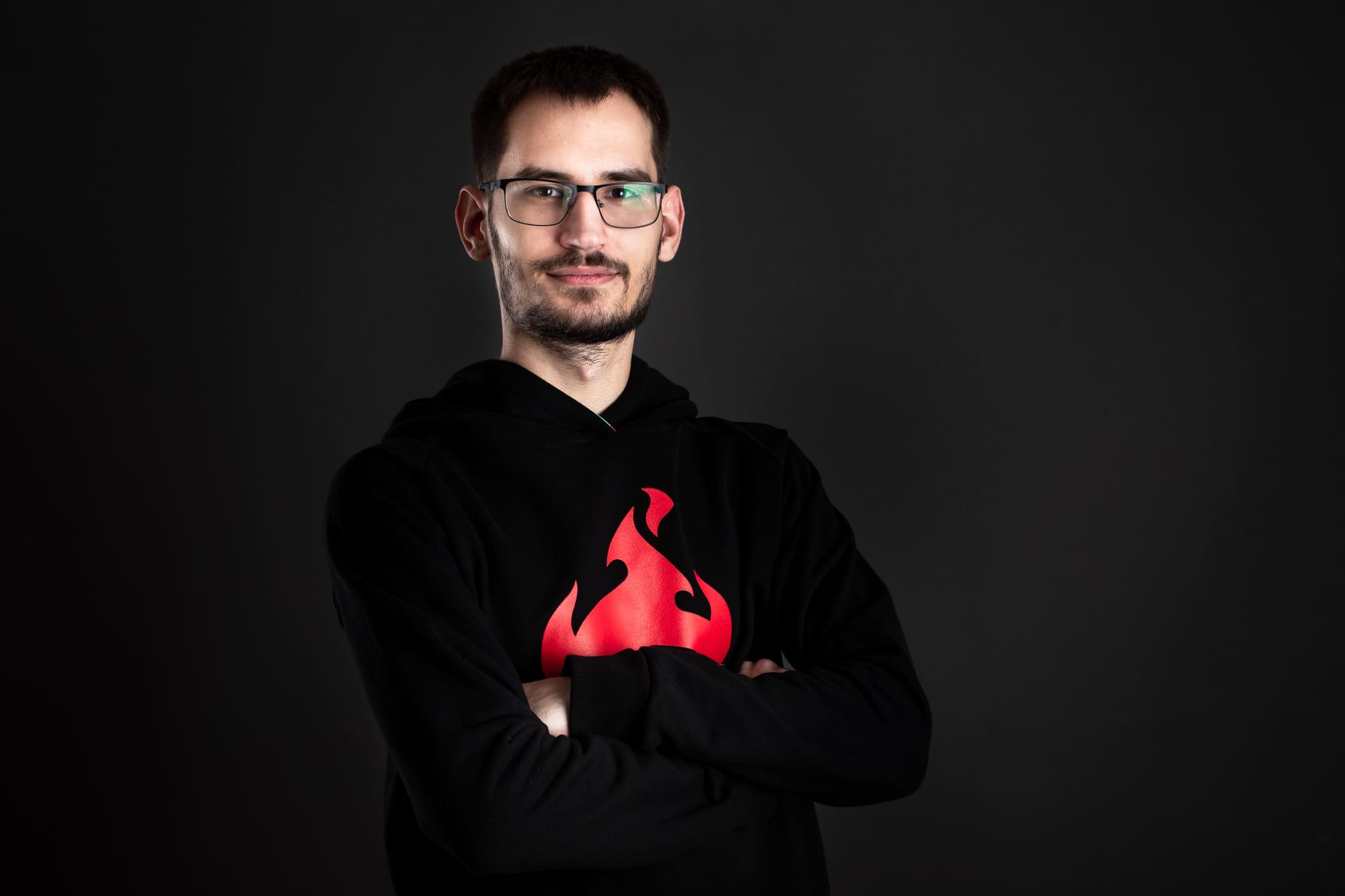
In a game, the work required for a single frame has a strictly defined budget. That makes writing performant code an essential skill, not simply an optimization to consider when a problem appears.
The broader lesson is that technical decisions cannot be separated from the experience of the person using the product. Performance, stability, and reliability are not simply engineering concerns; they shape what the final product can deliver.
The same applies to the way a company operates. A successful project depends on more than individual talent. It takes an organization that can develop its people, bring in the right expertise, manage complexity, and adapt as its ambitions grow.
Saber Serbia's journey from 2D casual games to large-scale international projects shows that building a studio capable of competing globally is a long-term process. It requires investment, experience, and the ability to grow beyond the limits of the existing team.
There is no single formula for building a successful game development company from the Balkans. But the team's journey shows that it takes more than one ambitious project to get there. It takes the willingness to evolve, learn, and keep building the people, knowledge, and structure that make the next challenge possible.